
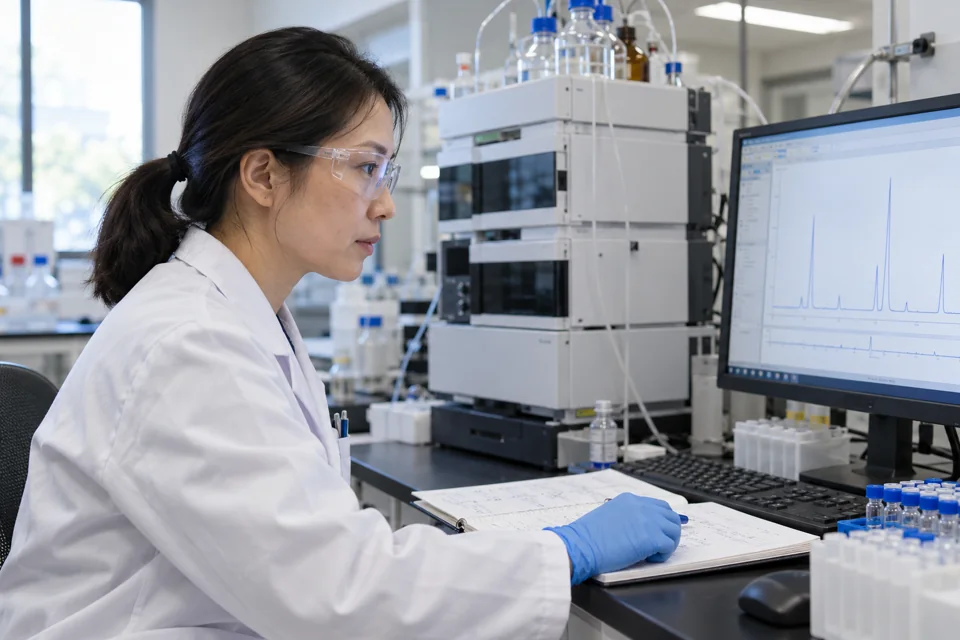
A peptide test result outside an approved acceptance criterion needs a documented investigation and a justified batch decision. Preserve the original evidence, assess possible laboratory causes and expand the review when needed. A later passing result cannot, by itself, explain or erase the initial failure.
Published by Hytanbio Tech. Technical references checked 31 October 2026. Written for B2B material qualification and CDMO project planning.
Define the failure against the agreed specification
Out of specification, or OOS, means a result falls outside an established acceptance criterion. FDA’s May 2022 OOS guidance addresses pharmaceutical production and includes relevant in-process laboratory tests. For a peptide CDMO project, record the approved specification version, method and reporting basis before interpreting the result.
A result within specification can still be unusual compared with the batch history. That situation may warrant an out-of-trend review under the agreed procedure. Treating every unusual value as OOS confuses the two decisions; overlooking a meaningful trend can also leave a quality issue unexplored.
Preserve the evidence before further testing
The investigation record should allow a reviewer to reconstruct what happened. For a chromatographic test, a single PDF plot may omit the information needed to understand the sequence, integration or changes to the record. FDA’s data-integrity guidance concerns reliable and accurate drug-CGMP data, including the context needed to interpret records.
- Link the original sample, preparation record and instrument sequence to the material batch.
- Retain the original result, calculations, relevant electronic records and documented changes.
- Record the applicable standard lot, assigned value and validity status.
- Keep the chronology of discovery, notification, review and any further authorised work.
- Identify which related batches or results may be affected by the same issue.
Keep the batch in its appropriate controlled status while the authorised quality function decides the next steps. The contract should identify who communicates with the customer and who can approve disposition.
Separate a demonstrated laboratory error from an unexplained result
Initial laboratory assessment
The laboratory checks the original execution and available evidence for an assignable cause. A demonstrated calculation mistake can be assessed from the records. A general statement that the analyst “probably made an error” does not establish what happened or support invalidating a result.
Broader investigation
FDA’s OOS guidance distinguishes an initial laboratory phase from a full-scale investigation when appropriate. The wider review considers the manufacturing history and other relevant evidence. For a CDMO, this can require coordination between the testing site, manufacturing site and customer. Explain the rationale for the investigation’s scope and the batches included.
Agree the rules for retesting and resampling
Retesting the existing laboratory sample and taking a new sample address different uncertainties. Neither should become an open-ended search for an acceptable number. FDA’s guidance discusses documented testing plans and the limitations of using averages to deal with an OOS result. Method-defined replicate reporting needs to be distinguished from averaging separate passing and failing determinations after the event.
Before any further work, the authorised investigator should record the question being tested, the proposed work and the criteria for interpretation. If the underlying question remains unresolved, another measurement adds data without supplying the missing explanation.
What a customer should receive at closure
A useful closure summary identifies the original result, findings, remaining uncertainty and the basis of the batch decision. It states the corrective or preventive actions where needed, the affected scope and the responsible approver. Confidential manufacturing detail can be handled through the agreed access arrangements while preserving enough evidence for the customer’s quality decision.
- Check whether the conclusion is supported by the retained records.
- Confirm that all relevant original and subsequent results were considered.
- Review the impact on other batches and on previously reported results.
- Record the final disposition and follow-up responsibilities.
These expectations belong in the peptide CDMO quality agreement. During supplier qualification, discuss the investigation process alongside quality documentation and the batch evidence package. Research and cosmetic projects should define their contractual controls and applicable standards explicitly.
Frequently asked questions
Can a passing retest cancel the original peptide OOS result?
A passing retest alone does not explain the original failure. The investigation must assess the original and subsequent evidence and document the basis for any invalidation or batch decision.
Are OOS and out-of-trend results the same?
No. OOS concerns an established acceptance criterion. An out-of-trend result may remain within specification while departing from an expected pattern. The applicable procedure determines the review required.
Who should approve the batch decision after an investigation?
The authorised quality function identified in the applicable quality system and agreement should approve disposition. The CDMO and customer should define notification, access to evidence and approval responsibilities before work begins.